Guide · 7 minute read
Best trim sizes for puzzle books
The best trim sizes for KDP puzzle books: why 8.5 x 11 and 6 x 9 are common, which puzzles suit each size, and how trim size affects pages and price.
Last updated
Trim size is the finished size of your book, the width and height after the pages are cut. It is one of the first decisions you make, and one of the hardest to change later: your interior PDF must match it exactly, and so must your cover. For puzzle books, the right trim size depends on the reader and on the puzzles inside. This guide explains the common choices and why.
The sizes Puzzlil supports
Puzzlil supports seven KDP paperback trim sizes: 5 x 8, 5.25 x 8, 5.5 x 8.5, 6 x 9, 7 x 10, 8 x 10 and 8.5 x 11 inches. KDP offers other sizes too, but these cover what puzzle book publishers use most.
In practice, most puzzle books use one of two: 8.5 x 11 or 6 x 9.
8.5 x 11: the puzzle book standard
8.5 x 11 is the largest common paperback size, the same as US letter paper. It is the most popular size for puzzle books, and for good reasons:
- Big grids. A sudoku or word search can fill most of the page, with room to write.
- Large print. It is the natural choice for large print books for older readers.
- Kids' books. Children need big squares and wide maze paths.
- Two per page. If you want a compact book, two easy sudoku, mazes, scrambles or cryptograms fit on one 8.5 x 11 page.
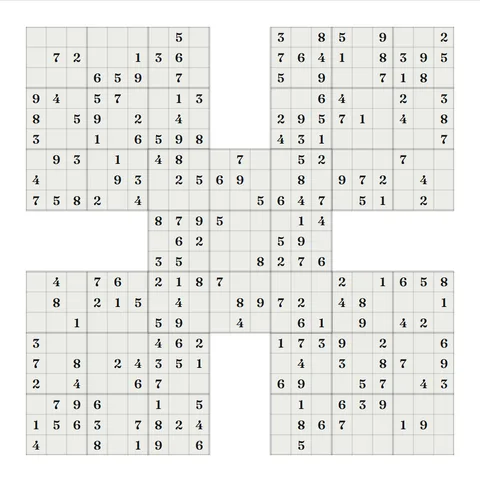
- Big puzzles. Samurai sudoku (five overlapping grids), 16 x 16 sudoku and nonograms need the room.
The downside is that it is less portable. That rarely matters for a puzzle book used at a table.
8 x 10: slightly smaller, still roomy
8 x 10 is a good alternative to 8.5 x 11 when you want a slightly smaller book that still gives large grids. It works for most puzzle types, including large print, and allows two puzzles per page on the same types.
6 x 9: compact and portable
6 x 9 is a common size for novels and non-fiction, and a good size for a puzzle book you carry around: on a train, on holiday, by the bed.
It suits:
- Text-based puzzles, such as cryptograms, word scrambles and word ladders, which don't need a big page.
- Classic sudoku and word search for adults, one puzzle per page.
- Travel and pocket books.
It is less suited to large print, to young children, and to the biggest puzzles, which become too small to solve comfortably.
The smaller sizes: 5 x 8 to 5.5 x 8.5
The smallest trims make neat little books, good for stocking fillers and travel. They work best for small puzzles and text puzzles. Grids get small quickly, so test a page before committing. They are not a good choice for large print.
7 x 10: in between
7 x 10 sits between 6 x 9 and 8 x 10. It can suit a mixed adult puzzle book that wants to feel bigger than a novel without the size of a workbook.
How trim size affects your page count and price
A smaller trim fits less on each page, so the same number of puzzles takes more pages. More pages means:
- A wider gutter once you pass 150 pages (see KDP margins for puzzle books).
- A wider spine and a different cover size (see cover size and spine width).
- A higher printing cost, because KDP's print cost depends on page count and size. Check KDP's own pricing pages for the current numbers.
Going the other way, a big trim with two puzzles per page can keep a book with many puzzles to a reasonable page count.
Matching puzzle types to trim sizes
| Puzzle | Good sizes |
|---|---|
| Sudoku (classic) | 8.5 x 11, 8 x 10, 6 x 9 |
| Large print anything | 8.5 x 11, 8 x 10 |
| Kids' puzzles and mazes | 8.5 x 11 |
| Samurai, 16 x 16, nonograms | 8.5 x 11 |
| Word search | 8.5 x 11, 6 x 9 |
| Cryptograms, scrambles, word ladders | 6 x 9, smaller sizes |
Choosing for your book
Ask three questions:
- Who is the reader? Older readers and children: go big. Commuters: go smaller.
- What are the puzzles? Big grids need big pages; text puzzles don't.
- How many puzzles? Many puzzles on a small trim means a thick book.
When in doubt for a first puzzle book, 8.5 x 11 is the safe choice.
Changing your mind
Once a paperback is published, you can't change its trim size. A different size means a new interior, a new cover and, in practice, a new book. So decide before you build. In Puzzlil, you can change the trim size while you are still working on a book, and the layout, margins, page count and cover all update; the preview shows the result on every page.
See the sudoku book maker and other puzzle type pages for the sizes that suit each type.
Common trim size mistakes
Choosing a small trim for large print. A 6 x 9 page can't hold a truly large print sudoku and its margins. If the book is for older readers, start at 8 x 10 or 8.5 x 11.
Mixing sizes in one series. Readers like a series to sit together on a shelf. If Volume 1 is 8.5 x 11, keep later volumes the same unless there is a good reason to change.
Forgetting the margins. The live area on a page is the trim size minus the margins. On a 6 x 9 book with a 0.5 in gutter and 0.25 in outside margins, the space for each puzzle is 5.25 x 8.5 in. Check a puzzle fits comfortably in that space, with room for a heading and a page number.
Building the interior at the wrong size. Letter-sized documents and A4 documents look similar on screen but are different sizes. KDP needs the PDF page size to match the trim exactly.
Ignoring the cover. The cover is sized from the trim and the spine. Change the trim and the cover changes too, so set the trim before you design the cover.
A worked example
Say you want 150 sudoku with answers. On 8.5 x 11 with one puzzle per page, that is 150 puzzle pages, about 50 answer pages and a few pages of front matter: around 210 pages, so a 0.5 in gutter. With two gentle puzzles per page, the puzzle pages drop to 75 and the book to about 135 pages, with a 0.375 in gutter and a thinner spine. On 6 x 9 with one puzzle per page, it is again about 210 pages, but each grid is smaller. Same puzzles, three quite different books.
Questions
Can I change trim size after publishing?
Not on the same edition. A new trim size means new files and, in practice, a new book. Decide before you build.
Is 8 x 10 a good size?
Yes, it is a little smaller than 8.5 x 11 and still gives big grids.
Which trim sizes does Puzzlil support?
5 x 8, 5.25 x 8, 5.5 x 8.5, 6 x 9, 7 x 10, 8 x 10 and 8.5 x 11.